
Phocuswright Europe returned to Barcelona from 15 to 17 June, and the theme was noticeably different from last year. In 2025, the industry was still asking "what if?" about AI. This year, the questions were sharper: what's actually working, who's deploying outside of POCs, and where is the money going?
Phocuswright's Pete Comeau framed it well before the event even started: travel is moving out of the experimentation phase and into real deployment, and that's putting a different kind of pressure on leadership teams. Three days on Center Stage, plus the conversations happening in the corridors and over long Spanish dinners, largely confirmed it.
Here's what stood out to me.
AI visibility went from side topic to main stage
For a company built around helping travel brands get found by AI, the most telling shift wasn't any single session. It was how many sessions touched on the same question: when AI compresses the path from discovery to booking, how do travel sellers get found, evaluated and chosen?
The programme dedicated real airtime to agentic commerce and what happens as interfaces become less dependent on traditional websites. The uncomfortable implication for many brands in the room: the assets, content and capabilities that drove visibility in the search era may not be the ones that drive it in the answer era.
A dedicated session on AI visibility dug into exactly this. The comparison drawn on stage was to the early days of SEO, when nobody fully understood the ranking factors and the rules changed constantly. Hotel owners are already asking why their properties don't show up in ChatGPT answers. Referral volumes from AI platforms are still small relative to search, but they're growing fast, and the traffic that does arrive converts better because those travellers have already done their research inside the AI tool.
That matches what we see in our own client data every day. The brands treating generative engine optimisation as a 2027 problem are the ones who will spend next year catching up.
Travellers are moving faster than trust
Booking.com's Chief Business Officer James Waters gave one of the most grounded takes of the conference. On the move from AI-assisted planning to AI agents actually making decisions and bookings, he pointed to the enormous gap between "intellectual intrigue and practical trust". Travel is emotional, expensive and time-consuming, and the cost of an agent getting it wrong is far higher than in most other categories of commerce.
Phocuswright's own research, presented on Center Stage, backed this up. European travel demand is resilient, with global gross bookings on track to pass $2 trillion by 2027. AI usage in trip planning is rising sharply. But trust remains layered: travellers are delegating more of their research to AI, but booking and payments still require manual intervention.
AI intervention is coming, but adoption won't be a clean switch. Which brings us to my panel.
My view from Center Stage
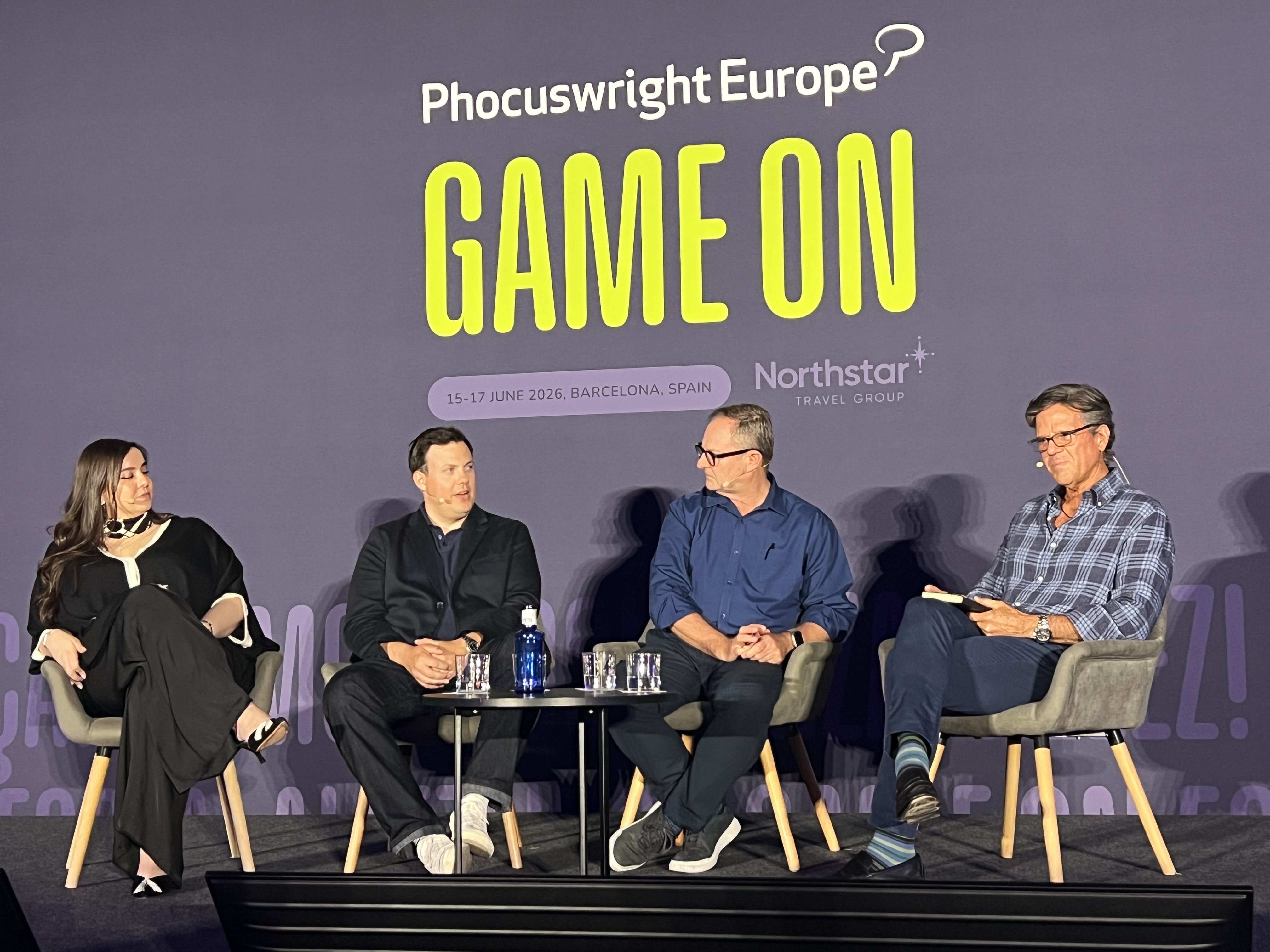
I was privillaged tojoind investor and operator heavyweights Chris Hemmeter (Thayer Investment Partners), Roger Sharp (Chair, Web Travel Group and North Ridge Partners) and Leyla Allahverdiyeva (SVP Sales and Partnerships, Nuitée) on Center Stage for a conversation on startups, founding, investment and where travel technology goes next. This conversation could have run for hours. Three core points I made during that discussion are worth repeating.
Customers want outcomes, and they'll pay for them. It's no longer enough to build software and hand it to the customer. Anyone can build software now. The companies that win build capabilities and use them to deliver outcomes, and that's what they sell. This is the "services as software" shift playing out in real time, and it shaped how we've built Obvlo from day one. Our clients don't buy a content tool. They buy visibility in AI search, engagement and higher conversion.
The agentic transition is not black and white. Travel booking isn't flipping cleanly from human to agent. There are more human travel agents on LinkedIn today than there were a year ago. The future is messier and more interesting than the headlines suggest, and strategies built on a binary switchover will misjudge the timing on both sides.
It's the easiest time in history to build a product, and one of the hardest to build a durable company. When anyone can ship software, the moat isn't the software. Domain expertise, talent, strategic partnerships and deep workflow integration are what make a company defensible. AI is a leveler at the feature layer and an amplifier at the structural layer.
The bigger picture
Beyond AI, the programme covered the growing influence of social and creator-driven demand, the convergence of loyalty, personalisation and payments, digital identity moving from concept to implementation, and the perennial tension between overtourism and destination strategy. Digital identity in particular is one to watch: familiarity with the EU Digital Identity Wallet is low, but intent to use it is high among travellers who understand it, and paired with AI agents it's what turns suggestion into transaction.
But the thread running through all of it was the same one running through our own work: the way travellers discover, evaluate and choose is being rebuilt, and the brands that show up in AI answers will take a disproportionate share of the demand that follows.
Barcelona confirmed what our State of AI Visibility Report, being released later this month, found. The gap between the brands preparing for AI-led discovery and those ignoring it is widening. The good news is that a playbook is emerging. We're already looking forward to continuing the conversation in London in 2027.
--
If you want to know where your brand stands in AI search today, get in touch.
Obvlo helps hotel groups, DMOs and tour operators get cited by AI search engines including ChatGPT, Perplexity, Gemini and Google AI Overviews.